Why speed optimization matters: gorgeous rooms, slow pages
Plenty of West Hollywood businesses sell through images. For example, a hotel shows its rooftop pool and its rooms, a restaurant its patio at dusk, a showroom on Melrose its newest pieces, a salon its finished color. Those photos often go onto the site straight from the photographer, at full size, together with a slideshow, a booking widget, a map and a handful of tracking tags. On office wifi it looks fine. On a phone halfway down Santa Monica Boulevard, however, it can take long enough for the visitor to give up.
Indeed, that phone is where most first visits start here. People search on foot, between plans, often after dark: “west hollywood restaurants open late”, “live music west hollywood tonight”, “west hollywood things to do at night”. Only about 13 inches of rain fall in a typical year, so much of that searching happens outdoors, on patios and sidewalks, over mobile data.
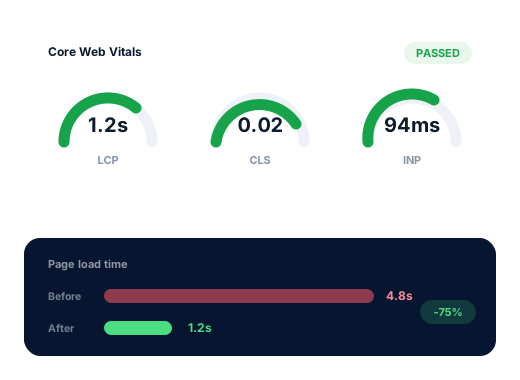
Google also pays attention. Its page experience signals come from what real Chrome users go through on your pages, not from a test in a lab, so the visitors who stood on a sidewalk waiting for your gallery are the ones grading you. Even so, a beautiful site and a quick one are not opposites. In fact, most of the weight comes off without losing a single photo.
-
2.5 s
Google’s “good” mark for the main image to appear
-
200 ms
response to a tap that Google counts as good
-
0.1
layout-shift score a page should stay under